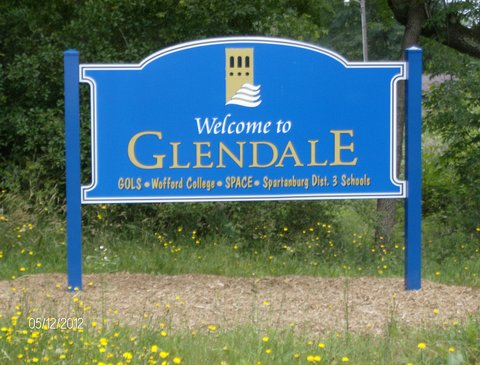
Glendale, South Carolina
Past - Present - Future
This web site is intended to be a place of reunion, a place of memory and a place of celebration of the town of Glendale and its people. The pressures of modern life make it harder and harder to maintain a sense of community for a town. At the same time, the wonders of the Internet make it possible to establish connections, share stories and information in ways that were impossible in days past. This web site will make it possible for anyone having an interest or emotional tie to Glendale to connect with others with the same interests. We hope that this web site will be a place to renew old friendships, discover relatives who have passed on, meet new cousins, share news about the community and hopefully acquire a new appreciation for the special place that is Glendale.
 All of the stories and articles on this website are listed on the page, Contents. They are all also listed as links in individual articles. However, this Contents page shows links to all of the stories in one place.
Dr. Bobby G. Stephens
Glendale native and major community supporter passed away in June of 2024. You can read more details at Bobby Stephens.
Mary Lee McKinney TeasterIt is with extreme sadness that I share this news on the Glendale website. My wife, Mary Lee McKinney Teaster, passed away in February of 2023 after a long and debilitating illness. Her obituary can be read at Mary Teaster. I cannot begin to put into words how much I miss her.
Mary and I started the Glendale website almost 15 years ago. Mary grew up in Glendale and she had many fond memories of the place and the people.
New Things Are Happening
One of the main reasons for developing this web site is to help publicize the new and exciting things that are starting to happen in Glendale. Join the new organization, the Friends of Glendale that is helping to bring about these changes. Click on the link below to read full details about all the new things that are happening in Glendale and recent additions to this website.
New Things To This Website And In Glendale

The Glendale Chronicles
Glendale native, Dr. B.G. Stephens has been instrumental in helping bring about all of the positive things that have happened to the town. He has started a series of information pieces about what is happening in Glendale and its institutions. These will be called the Glendale Chronicles and the first issue has just been released. It can be read at Chronicle 1. Other issues will follow with the next planned for about December 1.
Glendale Community Graveyard Commitee
The annual Meeting and Supper for the Glendale Community Graveyard Commitee is held every spring. For more details see Supper Form. This form can be printed out and mailed with your check or donation if you plan to attend the meeting.
Developments
In 2008, Glendale was declared a Blueprint South Carolina Community by the American Institute of Architects. Click on this link "Blue Print SC Certificate" to see this award.
Wofford held a dedication ceremony Tuesday, April 20, for the Goodall Environmental Studies Center in Glendale. Wofford formally unveiled the restored former mill office on the banks of Lawson's Fork Creek for the center, named after Chris Goodall, a 1979 Wofford graduate and current college trustee. Read the full story at (http://www.goupstate.com/article/20100421/ARTICLES/4211032?p=3&tc=pg).
Dr. Benjamin R. Dunlap, the President of Wofford, delivered the main address at the dedication. Click on this link, Dedication Speech, to read the speech.
In November, 2010, Wofford received word that the Environmental Studies building (Goodall Center) at Glendale had achieved Platinum LEED ( Leadership in Energy and Environmental Design) certification from the U.S. Green Building Council. That is the Council’s highest certification (in ascending order: Certification, Silver Certification, Gold Certification, and Platinum Certification). Read about the award in the the Spartanburg Herald. You can also read more details about the building and the award on the Wofford website at Goodall Center.
The Goodall Center continues to win honors. On March 29, 2012, the Center received the Exemplary Project Award from the U.S. Green Building Council-South Carolina Chapter. The award recognizes outstanding projects with the ability to inspire others to pursue Leadership in Energy and Environmental Design (LEED) certification. Read the full story at Goodall Center Award.
Webcam of Glendale Shoals Now in OperationIn April, 2012, a live video camera was installed with a view of Lawson's Fork and the shoals below the dam. This camera operates 24 hours a day and the view is available at Lawson's Fork Shoals Camera.
Wofford College Wins Large GrantA Timeline describing the important steps and milestones of all the new developments at Glendale has been prepared by Dr. B. G. Stephens. Click on this link, Timeline, to read it.
Wofford's environmental studies program has received a $383,000 grant from the Margaret A. Cargill (MAC) Foundation to fund the initiative that will bring the college community together with local citizens to focus on local rivers that will include Lawson's Fork Creek. Read full story at Gargill Grant.
Old Iron Bridge in Glendale is Now Being Restored
In 2012 it was announced that the bridge was going to be renovated at a cost of $600,000. Now, on August 19, 2017, the work has actually started. You can read the details and see photos at Glendale Bridge Work Is Underway. (Read the original announcement in the Spartanburg Herald online site at Glendale Bridge Renovation.)
Availability of reports, photos etc. relating to GlendaleDr. B. G. Stephens is a native of Glendale and has been very active in the Friends of Glendale organization and assisting with the various exciting projects that are happening with the the community. He has accumulated a variety of material that is pertinent to Glendale and the new projects and has arranged to make the material available on this web site. You can see a list of the material he has and gain access to it through links on the page, Glendale Reports.
Pacolet High School Memorial Reading Garden
An effort was underway to establish a Pacolet High School Memorial Reading Garden at the Pacolet Library. This effort was successful and the reading Garden will become a reality. To learn more click on Reading Garden.
United States Department of Agriculture Funds Development Study
The United States Department of Agriculture-Rural Development (USDA-RD) awarded Federal stimulus money in the amount of $60,000 to The Town of Pacolet and Glendale for an economic, educational and recreational feasibility study of the Lawson’s Fork Creek—Pacolet River Corridor that connects the two former textile villages in Spartanburg County. The purpose of the feasibility study is to determine what economic and recreational opportunities can be realized by attracting the funds needed to bring to maturity and fruition the projects identified through the study.Click on this link to read more details.
In May, 2011 the USDA released its preliminary report. Click on this link to read part of the preliminary report.
It All Started With Lawson's Fork Creek
Lawson's Fork Creek is the reason that the present town of Glendale exists where it does. Click on the following link to read more about the creek and its importance to the story of Glendale.
Making Iron on Lawson's Fork
Iron tools and other implements were badly needed by the new settlers. Fortunately, all of the necessary parts of the iron making process were available at the place that was to eventually become the town of Glendale. There was water power to turn a water wheel and power a bellows to operate the furnace. There was iron ore along the banks of the creek. There was limestone available for the digging and there was a vast number of trees to be turned into charcoal. The iron industry was to be very important in the history of Glendale. Click on the link below to read more details about the iron industry and how it affected the history of Glendale.
The Iron Works
Map of Location of Iron Works
Satellite View of Iron Works Location and Glendale
The Revolutionary War and Glendale
The presence of the Iron Works made the vicinity around Glendale a very important place during the Revolutionary War. Click on the following link to read more about the War in the Glendale area.
Early Roads to Glendale
The iron works was served by one of the earliest roads in all of Upstate South Carolina. It was called the "Georgia Road". It was very important during colonial and the Revolutionary War Era and was important to the development of the town. Some of it is still in use today. Click on the followng link for more information.
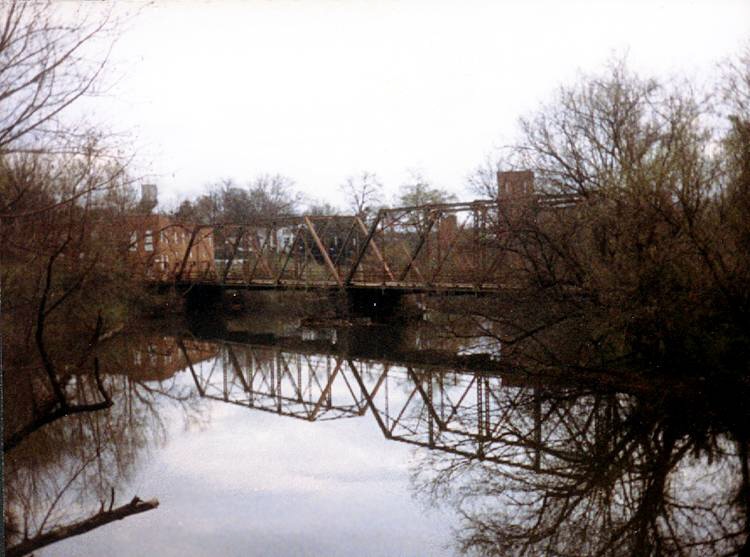
(Glendale Bridge. Picture by Jim Cody)
The Coming of the Textile Mill
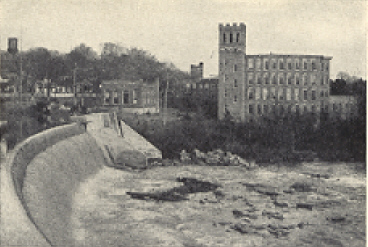
Lawson's Fork Creek was not the site of the first textile mills in Spartanburg County. The first mills in the Upcountry were built on the waters of the Tyger River between 1816 and 1818 by two groups of new Englanders. Both of these mills burned but were rebuilt. One group ceased operation in 1826, the other group continued to operate small textile mills for many years. What was special about the textile mill built, at what was to become Glendale, was the size of the operation. Around 1832, Dr. James Bivings came from Lincolnton, NC to build and start what became known as the Bivingsville Cotton Factory. Click on the following links for full information about the origin and operation of the textile mill at Glendale.
In March of 2004, there was a major fire that destroyed most of the former Glendale mill. Mr. Terry Gilmer of Glendale photographed the fire as it was happening. He has been kind enough to make his photographs availble to us to use on this website. Some of his photographs can be seen on the following link. Glendale Mill Fire.
The Glendale Mill Fire
The factories at Bivingsville were very important not only to the folks that worked there but to the farmers and other people who lived in the Spartanburg vicinity. This is shown in a journal kept over a 15 year period by David G. Harris around the time of the Civil War. He was a farmer who lived near the Pauline community, over eight miles from Bivingsville. Click on the following link to read more about this.
The Families of Glendale
Starting with the Iron Works and continuing on with the coming of the Bivings textile mill and on down to recent times, Glendale has been a source of jobs and employment. To many folks over the last 200 years, Glendale was almost like the "Promised Land". In the early 1900's, it was a place where you could work and make cash money on a regular basis. Your family and children had more security than in a life of farming. Some families that found work already lived nearby. For the most part, they gave up full time farming to work in the new industries. Other families came from all over the Upstate of South Carolina and down from the mountains of North Carolina. They all had a common story - they needed work and they heard that jobs could be found at Bivingsville or later Glendale. They packed up their belongings and moved to the mill alongside Lawson's Fork to start a new life. Almost all of the family, including the children, worked in the mill. For a long time, the work schedule was 12 hours a day and a half day on Saturday.
By our modern standards, this was a hard life. However, our ancestors must have preferred it to the never ending toil and uncertain conditions of farming. Most that came to the mills stayed to raise their families there.
There are many residents or former residents whose families have been associated with Glendale for over a hundred years. Behind each of these families there is a wonderful story of how they came to Glendale, their successes and trials and failures. To read some of these family stories, click on the link below.
We earnestly solicit you to send us your family's story and how it is connected to the story of Glendale. We welcome memories, photographs, and incidents that can be added to the Glendale story. We are particularly interested in how your family came to be connected to Glendale. Also, we encourage you to share the biography of someone in your family to tell their individual story. Please send to Glendale Family Stories .
See an analyses of the 1860 Bivingsville at 1860 Census and the 1900 Glendale Census at 1900 Census.
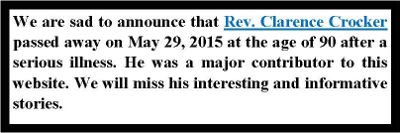
Contributions from Rev. Clarence Crocker and a Glendale Household ListingClarence Crocker was born in Glendale. He was the Post Master and held several positions with the mill including Manager of the Company Store. He has used his broad knowledge of the people living in Glendale over the years to put together a fascinating household listing of these folks. You can read this extensive listing at Glendale Households. If you or your family lived in Glendale since 1920 and were associated with the mill, it is very likely that your names will be on this list. Rev. Crocker has also furnished approximately 215 interesting articles for use in this website. Rev. Crocker's work biography and a list of the articles he has supplied to us can be read at Rev. Crocker's Biography.
Reverend Crocker's has recently completed an Index of the people buried in the GlendaleCommunity Cemetery. This was a huge task and the results can be seen at Cemetery Index.
His very latest effort has been to compile an Index of the Black families living in Glendale at the time of the 1940 Federal Census. Read this at Black Families in Glendale.
It is amazing how quickly our lives have changed from a rural pattern to the one we have today. The pace of technical change is so fast that we sometimes have trouble keeping up with it. We take things for granted in communications, travel, medicine, etc. that our ancestors would see almost as miracles. For the most part, these changes have occurred in barely one or two generations. Most children today, live in a vastly different world than the one their grandparents lived in at their age. Rev. Crocker was born and raised on a small farm a short distance away from the Glendale mill village He has written a very interesting story about growing up on the farm and has allowed us to use it on this website. His story points out how much our world has changed. Read his story at Growing Up on a Farm in Glendale. Life in the Mill Village
People have lived in the Glendale mill village from about 1835 until the present, a period of over 170 years. Hundreds, if not thousands, of people have lived, been born, died, or otherwise been involved with the village at Glendale. The village and its institutions and facilities have been very important in the lives of people in the past and continue to be so to this day. Click on the the following links to learn more about life in Glendale and the many things involved.
There are several books and other Internet sites that contain interesting information about Glendale. Click on the following page for a list of these.
Come
Visit Glendale. See the Goodall
Environmental Studies Center
that is on the forefront of
environmental education in this
country. Walk the trails and feel
the presence of the past. See and
photograph Lawson's Fork Creek and
historic Glendale Shoals up close.
Visit Glendale where "The past is
not even past." For directions and a
map, click on "Visit
Glendale."
|
This web site has been started as a public service to share the story of Glendale. See more information about Mary and her Glendale connection at Mary McKinney Teaster.
Contact Us at:
Gerald Teaster
1311 Jahnz Ave
Summerville, SC 29485
email - gteaster@pacoletmemories.com
Related Sites
Cliffside Mill in North Carolina was much like Glendale. Residents have started a fascinating website to tell the story of their people, town and their past. The site has movies taken in 1937 and 1940. These movies tell an intimate story of the community and the people as they went about their lives. Although taken at Cliffside, life in Glendale was very similar. The web site is:
http://remembercliffside.com/
Many of the new ventures being undertaken by Glendale are being done in partnership with Pacolet, our nearby, sister town. Pacolet opened its new, long awaited Museum on October 18. Pacolet has a web site at:
http://www.townofpacolet.com/.